Hey! I’m Heather and I’m here to help contractors make better cash decisions.
Today we’re talking about being busy but broke. Talking with contractors, I hear that the jobs are still coming in, the crew is busy, but they look at the bank account and feel stressed that payroll is coming out this week.
For a lot of contractors it gets even more confusing when they see your profit and loss statement. There’s profit there, but the bank doesn’t reflect it.
So are they safe to make the hire? Can they get the new trailer?
Most contractors ramp up sales to try to fix it. It works until it doesn’t. It’s a bandaid on a bigger operational timing issue that is very fixable.
What I find consistently is that most construction cash flow problems are not actually caused by lack of work. They’re caused by timing.
So when I meet a contractor who is making decisions based on their bank account, it’s a vulnerable spot to be because there are so many hidden operational factors that can affect cash at any moment.
If you want to go deeper into this specific issue, I wrote a companion article on why your bank balance lies about construction cash flow.

For example, meet Henry. Henry is a perfect example of a profitable but broke business. On paper the company is profitable, but cash pressure keeps building underneath the surface.
Henry owns a construction company doing around $4 million a year.
The phones are ringing.
The crews are busy.
Revenue is growing.
On paper, the business looks healthy.
But over a 60-day stretch:
Now suddenly:
The confusing part?
The business is still technically profitable.
Henry isn’t failing because there’s no work.
He’s stressed because cash timing broke before profitability did.
This is where contractors get trapped. Revenue can grow while cash gets tighter at the exact same time.
The key idea: Profit tells you whether the job should make money. Cash timing tells you whether the business can handle the pressure before the money arrives.
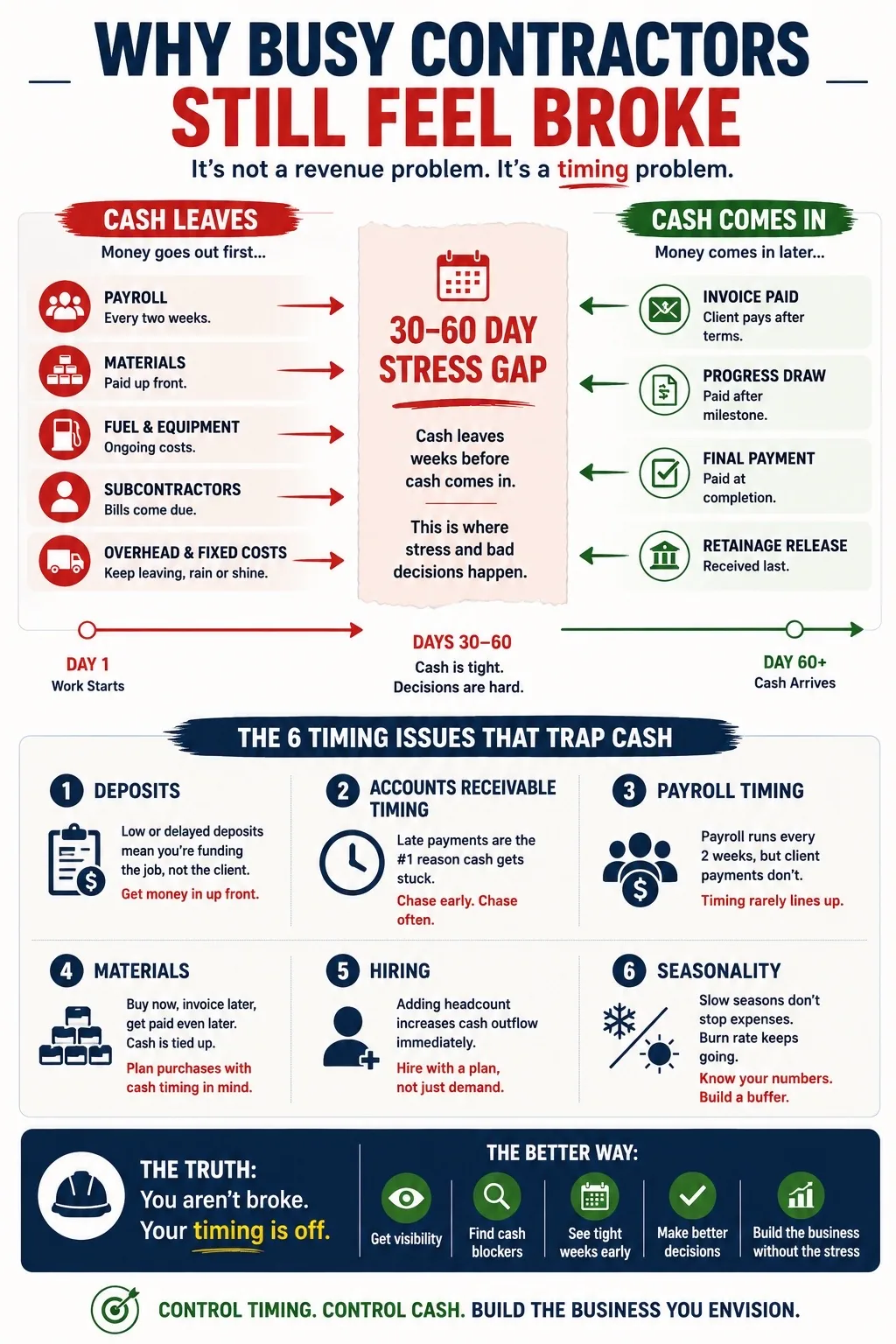
Low hanging fruit to stop being busy but broke is taking deposits. You take deposits on all your jobs and for any job over a month you take draws. This keeps your people paid and the lights on.
If you’re buying materials up front, your cash can get eaten quickly if timing slips. If the job takes longer or is delayed that’s inventory you sit on. Your jobs should all contain money up front.
Contractors I work with love their trade. They hate chasing money.
I’ve worked in the accounting department for many businesses over the years and I’ll let you know a secret: if there are cashflow issues with your client, they will pay their squeaky wheel first.
The remedy to avoid this is to:
Research on construction cash flow shows that work flow, resource flow, and cash flow all interact. In regular terms, one delay can create pressure in several areas of the business at once. This construction cash flow research is a more technical version of what contractors often experience day to day.
The job may still be profitable on paper.
But cash leaves the business weeks before cash comes in.
Before the job starts they purchase the materials. Their credit card is due monthly. Then they bill a month later. It can take another 30 days to collect.
The contractor may float those costs for months before seeing cash.
Hiring needs to be done in a way that boosts the revenue and efficiency of your team.
Otherwise payroll pressure builds quickly.
You can have a lot on the books but still go through slow seasons.
That’s why construction companies need to understand burn rate and runway before slow season hits.
A busy but broke contractor usually doesn’t feel broke because there’s no work.
They feel broke because cash timing and operational pressure stop lining up.
The truth is, many contractors aren’t actually broke.
Their timing is broken.
The better way is to create visibility before the stress hits.
You want to know:
Because when you can see cash clearly, you stop reacting and start making better decisions.
Busy contractors can still feel broke because cash timing and profitability are different. A company can have strong work, revenue, and profit while still feeling pressure from payroll, materials, delayed receivables, and slow season timing.
The most common causes are low deposits, delayed accounts receivable, payroll timing, upfront material costs, hiring before cash catches up, and seasonal slowdowns.
Contractors can reduce cash flow stress by taking deposits, using draws, following up on receivables, tracking burn rate, reviewing cash weekly, and creating forward visibility into upcoming pressure.
I put together a free contractor cash review to help you understand:
Enter your email and I’ll send over the Burn Rate Calculator plus a few practical things to immediately look at in your business.